Finding Alpha in the AI Supply Chain
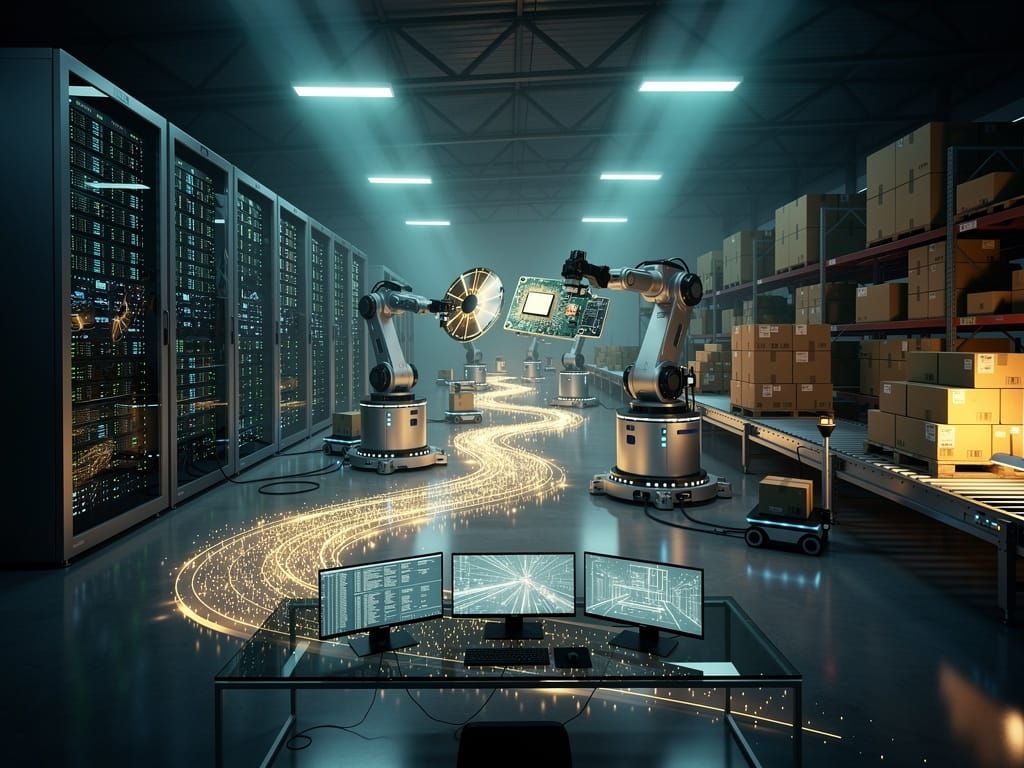
The most durable alpha from the artificial intelligence boom will not be generated by flashy applications, but by the companies building the physical supply chain that powers them. While consumer-facing AI models capture headlines, the true, sustainable profits are found in the picks and shovels of this technological gold rush - the highly specialized firms creating the foundational hardware upon which the entire ecosystem rests.
This hardware-centric approach offers a superior risk-adjusted return profile. The application layer is characterized by intense competition, low barriers to entry, and uncertain paths to profitability. The infrastructure layer, by contrast, is defined by immense capital requirements, decades of accumulated intellectual property, and long-term, high-value contracts. Companies that manufacture specialized semiconductors, advanced networking gear, or liquid cooling systems have deep, defensible moats that are exceptionally difficult for new entrants to cross. They are not just participants in the AI trend; they are the essential gatekeepers.
Mapping the AI Hardware Stack
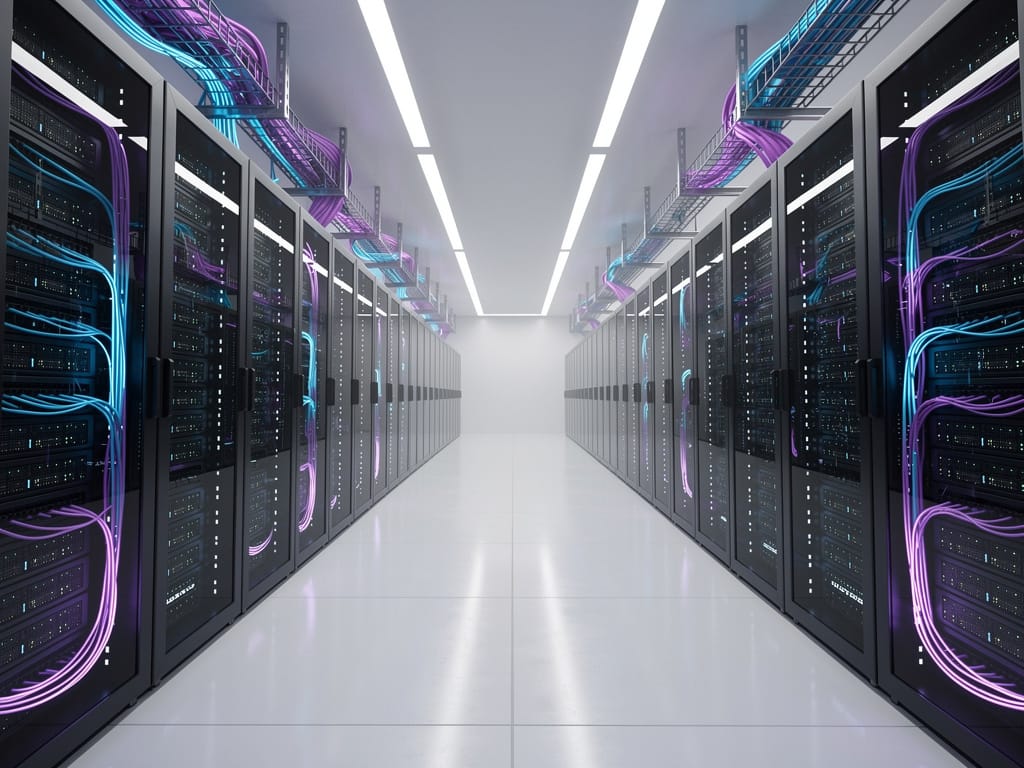
To effectively invest in this space, one must understand that the AI hardware stack is a complex, interconnected system, not a monolith dominated by a single component. While GPUs are the engines of AI, they are useless without a sophisticated ecosystem of supporting technologies. Identifying opportunities requires looking at each layer of this physical infrastructure and understanding its unique role and profit potential. This granular view allows an investor to move beyond the obvious plays and find value in the critical, yet often overlooked, sub-sectors.
The Brains: Semiconductors and Design
Graphics Processing Units (GPUs) are the undisputed stars of the AI show, and market leaders like NVIDIA have deservedly captured investor attention. However, the semiconductor universe is far broader. The intellectual property (IP) for chip architecture, licensed by firms like ARM, forms the very blueprint for these processors. The complex machinery required to etch circuits onto silicon, particularly extreme ultraviolet (EUV) lithography systems from companies like ASML, represents an absolute technological monopoly. And the foundries, such as TSMC, that physically fabricate these advanced chips operate with a scale and precision that takes decades and hundreds of billions of dollars to replicate. Each of these represents a critical chokepoint in the supply chain where significant value accrues.
The Body: Data Center Infrastructure
AI models do not live in the cloud; they live in highly specialized physical buildings called data centers. The power and thermal demands of AI servers are forcing a complete re-architecture of these facilities, creating a massive wave of investment in next-generation infrastructure. This is where many of the most compelling hidden opportunities reside. For instance, an AI server rack can consume over 100 kilowatts of power, an order of magnitude more than a traditional server rack. This has created a boom for companies that engineer high-density power distribution and management systems.
Furthermore, that immense power consumption generates an enormous amount of heat. Traditional air cooling is no longer sufficient. The industry is rapidly shifting toward direct-to-chip liquid cooling solutions to maintain optimal operating temperatures and prevent performance throttling. This is a highly specialized field with significant technical barriers, and the companies leading this transition are poised for explosive growth. Finally, thousands of GPUs in a single cluster must communicate with each other at near-instantaneous speeds. This requires a new class of high-speed optical networking and interconnects, creating another critical sub-sector essential for large-scale AI training and inference.
A Practical Approach to Portfolio Allocation
Understanding the supply chain is the first step; translating that knowledge into a sound investment strategy is the next. A prudent approach is to avoid concentrating all capital in a single, high-profile name. Instead, construct a diversified portfolio that spreads capital across the different layers of the hardware stack. This might involve a core holding in a dominant platform leader, balanced with smaller, tactical positions in key enablers within power, cooling, networking, and specialized memory.
This barbell-style strategy allows an investor to capture the overall growth of the AI infrastructure build-out while also gaining exposure to niche segments that may offer higher growth potential. When evaluating these companies, traditional valuation metrics like trailing price-to-earnings ratios can be misleading. It is more effective to analyze the durability of their technological advantage, the size of their total addressable market, and their ability to command pricing power. The demand for AI hardware is not a fleeting, cyclical trend; it represents a multi-year, structural upgrade cycle for the world's entire data infrastructure.
- True alpha in the AI sector is concentrated in the foundational hardware and infrastructure supply chain, not the application layer.
- Analyze the entire AI stack, from chip design and fabrication to data center power, cooling, and networking, to find hidden opportunities.
- Build a diversified portfolio of market leaders and specialized suppliers to manage concentration risk and capture growth across the ecosystem.
- Focus on companies with deep technological moats and a clear path to capitalizing on the long-term AI infrastructure build-out.
Key Takeaways
Ultimately, while the specific AI applications that will dominate the future remain uncertain, the foundational need for more powerful, more efficient, and more interconnected hardware is a certainty. By investing in the architects and builders of this new technological foundation, investors can position themselves on the most durable and profitable side of a generational shift in computing.