How Geopolitical Risk Reshapes Modern Investment Strategy

Historically, major geopolitical risk events have triggered an average S&P 500 downturn of 5.7%, with the subsequent recovery period lasting anywhere from a few weeks to several months. In the past, investors might have treated such events as unpredictable 'black swans' - rare and isolated incidents. Today, that view is obsolete. Persistent global tensions, from trade disputes to military conflicts, are no longer outliers; they are a structural feature of the modern market landscape, demanding a fundamental shift in how we construct and manage investment portfolios.
Understanding the New Battlefield for Capital
Geopolitical risk refers to the threat that international political events pose to an asset's returns. According to the Federal Reserve's Geopolitical Risk (GPR) Index, perceived risk levels in the last five years have remained consistently over 50% higher than the average from 2000-2010. This is not just background noise. It is a quantifiable variable that directly impacts corporate earnings, supply chains, and consumer confidence, creating measurable ripples across equity, bond, and currency markets.
These risks translate into tangible market volatility. When the U.S. imposed widespread tariffs on Chinese goods in 2018, for example, the iShares MSCI China ETF (MCHI) fell by more than 20% over the following six months. This wasn't an isolated reaction; it reflected a repricing of risk for any company with significant supply chain exposure to the region. An investor’s ability to anticipate and shield a portfolio from these direct and indirect impacts has become a defining skill for capital preservation and growth.
Data-Driven Responses to Global Instability
The appropriate response to this environment is not panic, but a calculated, data-driven strategy of diversification. This means looking beyond a simple mix of domestic stocks and bonds. During periods of high geopolitical stress, certain commodities act as a powerful hedge. For instance, in the first month following Russia's invasion of Ukraine in 2022, the price of gold surged by nearly 10%, while global equity markets faltered. Including an allocation to hard assets can provide a crucial buffer when traditional financial instruments are under pressure.
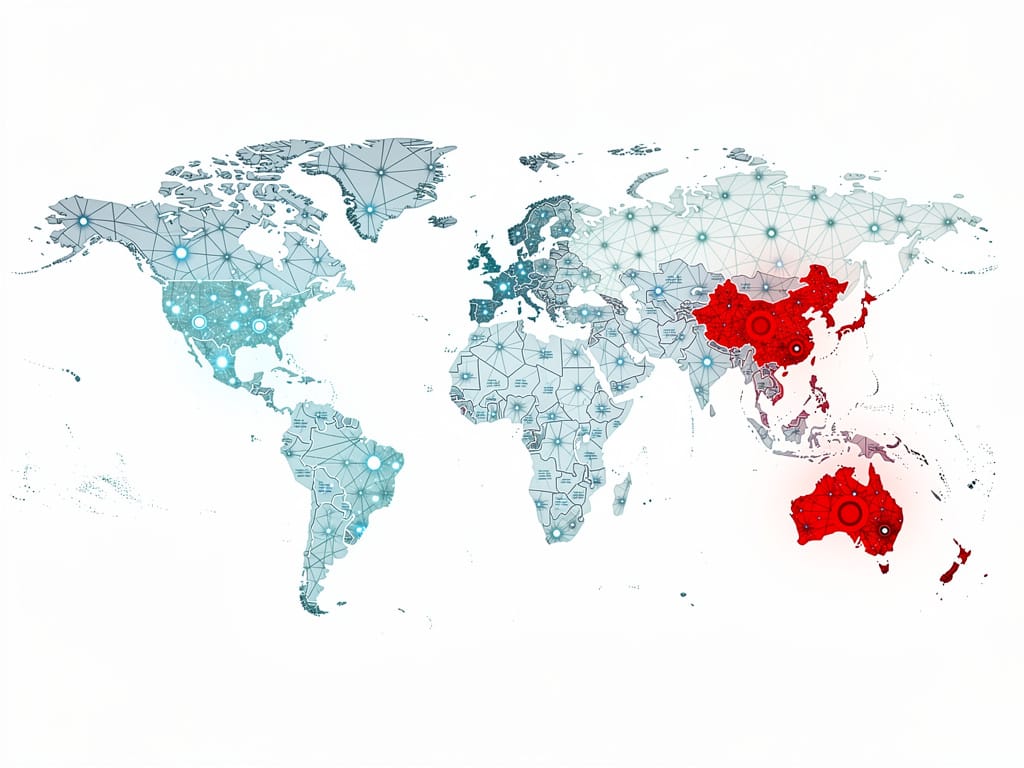
Geographic diversification is equally important. While it may feel safer to invest in one's home market, this creates concentrated risk. A study by Vanguard showed that over the 30-year period ending in 2022, a globally diversified 60/40 portfolio not only provided similar returns to a U.S.-only version but did so with 15% less volatility. Spreading capital across different economic zones and political systems reduces the chance that a single regional crisis can derail your entire financial plan.
Key Metrics to Monitor
A proactive strategy involves monitoring specific indicators that signal rising geopolitical tensions. Paying attention to these data points can provide an early warning system for your portfolio.
- The Geopolitical Risk (GPR) Index: This index tracks the frequency of news articles covering geopolitical tensions. Spikes in the index have shown a strong negative correlation with equity market returns in the subsequent 1 to 3 months.
- The CBOE Volatility Index (VIX): Often called the 'fear gauge,' the VIX has historically spiked by an average of 45% within a week of a major geopolitical event, signaling imminent market turbulence.
- Sovereign Credit Default Swaps (CDS): The cost to insure a country's debt is a direct measure of its perceived risk. At the peak of the Greek debt crisis, its 5-year CDS spreads widened by over 2,000 basis points, a clear 'sell' signal for assets tied to its economy.
- Currency Exchange Rates: Major currency pairs are highly sensitive to political instability. The British Pound fell 13% against the U.S. Dollar in the days following the 2016 Brexit referendum, instantly eroding the value of UK-based assets for foreign investors.
Building a Resilient Portfolio
Armed with this data, constructing a more resilient portfolio becomes a logical exercise. This involves a strategic allocation to safe-haven assets. During the 2008 financial crisis, a period of immense global instability, U.S. Treasury bonds delivered a return of nearly 14% while the S&P 500 lost 37%. Holding a portion of a portfolio in high-quality sovereign debt is a proven defensive maneuver.
Furthermore, investors must analyze sector-specific exposure. Geopolitical events do not affect all industries equally. Following the onset of the 2022 conflict in Ukraine, the iShares U.S. Aerospace & Defense ETF (ITA) rallied by more than 10% in just two weeks, while many consumer discretionary stocks fell. Understanding which sectors benefit from instability-such as defense, cybersecurity, and energy-and which are harmed allows for tactical adjustments that can protect and even grow capital during a crisis.
Ultimately, geopolitical risk is a permanent fixture of the investment landscape, not a transient storm. The data shows that while markets typically recover from the initial shock of a conflict within an average of 47 trading days, the underlying economic consequences can last for years. A modern investment strategy must therefore be built on a foundation of robust, multi-asset, and global diversification designed to withstand these specific pressures.
This requires a disciplined, unemotional approach. Your strategy should be built before a crisis, not during one. By regularly stress-testing your portfolio against historical geopolitical scenarios and rebalancing consistently, you can mitigate downside risk. A portfolio rebalanced annually has historically generated up to 0.40% in additional annualized returns-a small but meaningful edge earned by turning a reactive process into a proactive discipline.